How Do Marked Betting Areas Control Where Wagers Go?
A marked betting area does not physically force a player to place a wager in one particular spot. Instead, it makes the intended destination legible. Lines, boxes, numbers, colours and labels divide a table into recognised positions, helping players choose where to bet and helping staff identify, handle and record those bets.
That distinction matters. The markings are a visible convention; the rules and the actions of players and dealers give that convention practical effect. A printed box can indicate a permitted wager, but it cannot by itself settle a dispute, move a chip or determine a winning result. To understand how marked areas wagers are managed, it helps to look at the table as a working object: a surface designed to organise actions, not merely decorate a game.
Markings guide action; they do not make the wager
In a casino, a wager is usually a combination of an object, a position and a recognised procedure. The object might be a chip; its position is the marked area where it is placed; and the procedure is the game’s rule for accepting bets and resolving them. The markings help connect these elements. A player sees a choice, places a chip, and expects the dealer or other players to understand what that placement means.
That understanding depends on context. A chip sitting on a printed number in roulette has a different meaning from one placed on an area marked for a group of numbers. The chip itself may look much the same, but its position communicates the wager. Table markings therefore act as a visual vocabulary: they offer a set of recognised locations through which players express choices.
They also help establish the boundary between a wager and a chip that is merely being held, counted or moved. That boundary is not always obvious in a still image. A live stream may show a dealer’s hand hovering over the layout, for example, but the image alone may not reveal whether betting is still open, whether a chip has been accepted or whether a correction is under way. Markings are part of the system, not a substitute for the rules and timing that govern it.
The table as functional equipment
It is tempting to think of the table layout as a printed surface laid over a piece of furniture. In practice, casino table markings are part of the equipment. They organise where players sit, where wagers are placed, what a dealer can reach, and what can be seen from different positions around the table. The layout helps make a game repeatable from round to round.
Consider the relationship between player and dealer. Marked positions need to be accessible from the player’s side, while the dealer must be able to see them clearly enough to identify bets. The table also has to support handling: chips must be placed, adjusted, collected or paid without making the layout impossible to read. A design that is visually clear from above but awkward to reach across may be less useful in operation than it appears in a photograph.
This is why table layout function involves more than attractive graphics. The spacing of areas, contrast between lines and background, labels and orientation all affect how the game is used. Markings can guide a player towards a valid position, reduce ambiguity between neighbouring bets, and make groups of options easier to scan. They can also help staff check that wagers are in the right place before a result is paid.
Roulette: one wheel, several layouts
Roulette is a particularly useful example because the betting layout is not the wheel. The wheel is the rotating apparatus with numbered pockets; the layout is the cloth or other marked surface where players place their wagers. They work together, but they are separate pieces of equipment, with different roles. Calling every roulette arrangement “the wheel” blurs that distinction.
On a roulette layout, the numbered betting grid presents choices corresponding to the numbers on the wheel. Around or alongside it are marked areas for broader wagers, such as groups of numbers or other recognised categories. A player may place a chip directly on a number, or position it on a line or area that indicates a different kind of bet. The exact pattern and available bets depend on the particular layout and game.
The markings make those alternatives visible, but the placement conventions matter. A chip centred on a number is different from one balanced on a line between numbers. In a crowded game, the dealer needs to interpret the intended position and know whether the wager is clear enough to accept. The layout provides reference points for that judgement. It does not eliminate the need for handling conventions or for the dealer to manage the betting period.
This is also why a photograph showing only part of the equipment can be misleading. A close-up of a roulette layout may show its betting grid but omit the wheel. A view of the wheel may omit the betting areas and players’ chips. Neither image, by itself, shows the complete arrangement through which a round is played. When describing roulette, it is worth saying precisely which part is visible: the wheel, the layout, the chips, or some combination of them.

Visibility, handling and recording results
Marked areas help make wagers visible to more than the person who placed them. Other players may need to see where bets are located; the dealer needs to identify and manage them; and a camera or surveillance system may record activity across the table. These audiences do not all view the Article source table from the same position. A layout must work at close range for a player and remain intelligible from further away, as far as its design allows.
Handling is equally important. Chips placed too close together can make the intended bet uncertain. A dealer may need room to separate wagers, remove losing bets or pay winners without disturbing neighbouring positions. Markings establish a structure within which those actions can happen. They help turn a busy surface into a set of locations that can be referred to and checked.
Recording results also begins with legible arrangements. The table’s markings make it easier to associate a chip with a particular wager category, while the dealer’s actions and the game’s rules connect that wager to the result. The surface does not independently record every decision; rather, it supports the human and procedural work of identifying what was bet and what is owed. That is one reason consistency matters. Familiar divisions and clear labels reduce the chance that a player’s intention will be misunderstood.
- For players: markings show the recognised places to express a wager.
- For dealers: they provide visual reference points for checking and handling bets.
- For the table: spacing and divisions help keep separate wagers distinguishable.
- For observers: the layout makes actions easier to follow, though a single camera angle may not show everything.
What live streams show—and what they do not
Live streams are useful references because they show physical equipment in use. A viewer can watch hands approach a table, chips being placed on marked areas, a dealer managing the betting period and wagers being cleared or paid. This provides evidence of interaction: not just what the layout looks like, but how people use it during play.
Still, a stream is a view of an event, not a complete technical record. Camera angle, cropping, glare, resolution and timing can conceal important details. A chip may cover a printed line; a hand may block a number; a quick movement may be difficult to interpret after the fact. If the stream shows only the felt and not the full table, it may omit the dealer’s working space or the separate apparatus used in the game.
A stream can therefore help illustrate how casino table markings function, but it should be read carefully. Ask what is visible, what is outside the frame and what action is actually taking place. Seeing a chip on an area is evidence of a placement; seeing a wheel spin is evidence of a rotating mechanism. Exactly.. Neither image automatically explains every rule or proves how a particular wager is recorded.
Animated reels are a different kind of evidence
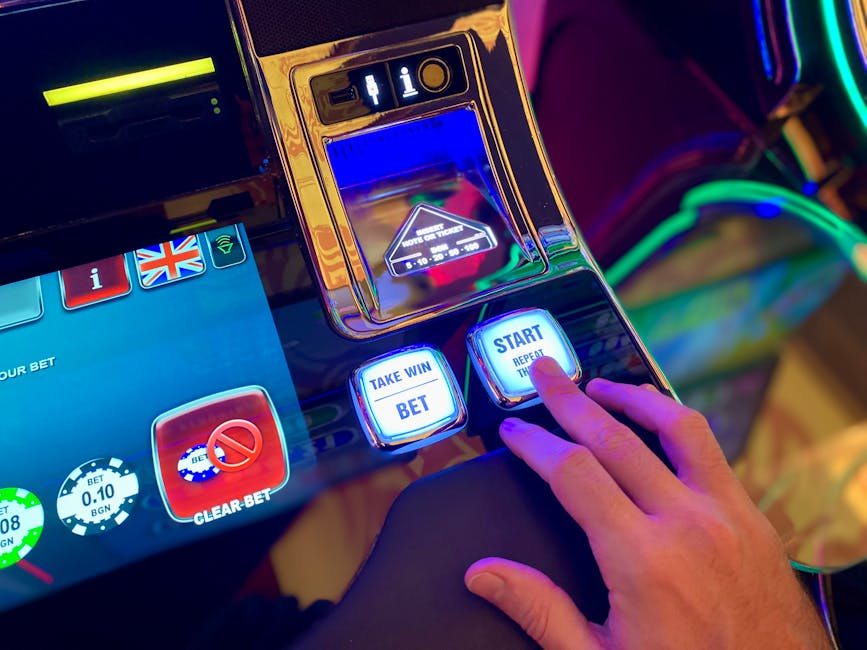
Animated reels in digital slot interfaces can also use marked or segmented visual areas, but they are not the same kind of evidence as a filmed physical table. A digital interface may display symbols moving in reel-like columns and indicate a wager through buttons, counters or highlighted options. These visuals show how the interface presents a game to its user. They do not, by themselves, prove that physical reels or mechanical equipment are operating behind the screen.
This distinction is useful when comparing different forms of gambling technology. In a physical table game, the layout is a tangible surface and chips are handled as objects. In a digital slot interface, a button press or touch input communicates a selection through software. The screen’s animations make activity visible, but the underlying operation is electronic. Treating animated reels as if they documented mechanical motion confuses visual convention with mechanism.
Feature Physical table game Digital slot interface How a choice is shown By a chip placed on a marked area of a physical layout By interface controls, counters or highlighted screen areas What can be observed Handling, placement and dealer actions, subject to camera view On-screen animation and interface responses What the image alone proves That equipment and people are visible in a particular moment That a digital display presents a particular animation or controlA short object-led history of casino layouts
Looking at gambling through its objects reveals how much of a game is organised before a result occurs. The table, its printed or woven surface, the chips and the dealer’s working area all help structure play. In this object-led view, a marked layout is not an afterthought added to a game. It is one of the tools through which a game becomes usable in a shared public setting.
As casino practices and equipment have changed, layouts have continued to perform practical tasks: making choices visible, separating options and supporting the handling of bets. Their appearance may vary by game, venue or design tradition, but the basic question remains: can players and staff identify where a wager belongs? The answer depends on the relationship between a marking and the action it is meant to organise.
That is why historical or collection descriptions should be attentive to the object’s details. One client recently told me learned this lesson the hard way.. A table surface can preserve evidence of how choices were grouped and presented, but a photograph or surviving cloth may not tell us everything about its use. We should distinguish what the object shows from what we infer about play, and note when associated equipment—such as a wheel, chips or dealer tools—is absent.
How to read a marked betting area
When examining a table or a video of one in use, a few practical questions help separate appearance from operation:
- What are the marked positions? Identify the numbers, boxes, lines, labels or other divisions before assigning meaning to a chip’s location.
- What is the player doing? A hand near a betting area is not necessarily placing a wager; look for the chip’s final position and the timing of the action.
- Who needs to read the marking? Consider the player’s viewpoint, the dealer’s reach and any camera angle that may affect visibility.
- What equipment is missing from the view? A partial image may show a layout without a wheel, or a wheel without the betting surface.
- Is the image physical or simulated? Live footage can show physical handling; animated reels show a digital presentation unless other evidence establishes a mechanical device.
Conclusion: the layout organises the wager
Marked betting areas control where wagers go by making recognised choices visible and giving players a shared way to indicate them. They guide placement, support dealer handling, help keep neighbouring bets distinct and make results easier to check. Their influence is practical rather than magical: the markings do not move chips or enforce rules on their own, but they shape the actions through which the game is played.
Understanding that role means paying attention to the whole arrangement. The layout is not the same as the roulette wheel; a live stream may show only part of the equipment; and animated reels are visual features of a digital interface, not proof of mechanical operation. Read the markings as part of a working system—one in which visibility, handling and recording all depend on how the table is designed and used.